

With the Internet, pornography has become very easy to access. Many people occasionally use it to feed their fantasies or accompany masturbation, without it creating any particular difficulty.
So the real question isn't just «Do I watch porn?» « or even » how many times a week?”. What matters is the place that this habit occupies in your life: can you choose not to watch, does it encroach on your sleep, work or relationship, and do you need ever more specific content to stay interested?
Frequent use is not automatically an addiction. On the other hand, when it becomes difficult to control and has negative consequences, it can be useful to change your habits.
What signs can indicate problematic use?
You feel like you need constant new stuff
Platforms offer an almost endless amount of content. Quickly switching from one video to another can accustom the attention to constantly seeking novelty. Some people then end up devoting more time to looking for the «right» content than really enjoying their sexuality.
This does not mean that the brain is permanently damaged or that any new preference is pathological. The signal to watch is rather your degree of control: are you watching content that you like voluntarily, or do you find yourself scrolling through videos for much longer than expected?

Porn becomes the only way to get excited
Another difficulty may appear when the excitement becomes very dependent on a specific scenario, screen or pace of stimulation. Real sexuality is generally slower and less scripted than a pornographic editing.
If you notice that having a partner has less interest or you have trouble getting excited without video, it may be useful to experiment with screenless masturbation sessions to bring more attention to personal sensations and personal fantasies.
This does not prove that pornography is the only cause of a sexual difficulty. Stress, relationship, fatigue, medication and health may also intervene.
You systematically use porn to manage an emotion
A person can get into the habit of opening a porn site as soon as they feel lonely, anxious, frustrated or bored. The orgasm then brings quick relief, but the initial problem remains present.

By force, behavior can become an automatism: stress → Porn → Masturbation → Temporary relief. This mechanism resembles other habits used to avoid an emotion, like eating without hunger or scrolling through social networks for hours.
The problem is not fun itself. It is the fact of no longer having other means of managing stress or boredom.
You regularly waste more time than expected
If you push back your bedtime, cancel activities, arrive late or neglect tasks because you keep watching, the impact becomes concrete. Similarly, if you try to reduce several times without succeeding, it indicates that the habit deserves more attention.
The goal is not to stick a label of ’addict« to you, but to honestly observe what this behavior costs you.
Does porn necessarily change the brain?

Sexuality, like other enjoyable activities, involves brain systems related to motivation, attention and reward, including dopamine. However, it is misleading to say that watching porn frequently «destroys the prefrontal cortex» or causes everyone to escalate towards extreme content.
Research on the problematic use of pornography is more nuanced. In some people, there are compulsive behaviors and great difficulty in controlling use; Many others consume pornography without presenting these problems.
The most useful criterion therefore remains the daily functioning, not a simplified theory on a «dopamine reserve».
How to regain control?
1. Start by observing without judging yourself
For one or two weeks, simply write down when you watch porn, how long you spend there and what happened just before. Were you excited, bored, stressed, alone or unable to sleep?

This observation often makes it possible to identify situations that automatically trigger the habit.
2. Reduce the most automatic opportunities
If the problem still comes to bed with the phone, leave the device further. If you look when you are bored after work, plan another activity at that time.
Blocking certain sites or disabling private browsing can help a few people, but a technical filter is more effective when it comes with a routine change.
3. Replace, don't just delete
Deciding «I will never watch again» sometimes creates a big void in times when porn was used to relax. Plan something else: sport, play, play, call a friend, out or manual activity.

If the main need is sexual, you can also masturbate without video, using your fantasies, your hands or a sex toy. A masturbator can help shift attention to physical sensations, but it is not a treatment for compulsive consumption and it is not a substitute for a relationship.
4. Set realistic limits
Some people prefer to stop completely for a while; Others do better by reducing frequency or duration. There is no single method.
For example, you can decide not to watch when you should sleep, not use multiple screens or give yourself a time limit. The important thing is that the rule is clear and measurable.
5. Work on the cause if the behavior serves as a loophole
If you mainly use porn when you are anxious, depressed or very alone, dealing with this difficulty will often have more effect than a simple ban. Strengthening social relationships, improving sleep and learning other stress management strategies can reduce the need to seek immediate relief.

When to ask for help?
It can be useful to consult if you feel like you are no longer controlling the use despite several attempts, if the behavior endangers your relationship, work or finances, or if you watch content that no longer corresponds to your values and hurts you.
A mental health or sexology professional can help understand triggers and build strategies without moralizing sexuality.
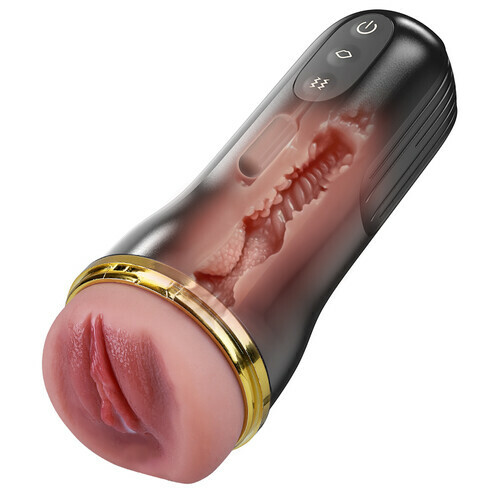 Captain – 5 suction 10 vibration simulated vaginal entry male masturbator49,99€View product
Find a chosen use
The goal is not to consider any pornography as toxic. For many adults, it remains one erotic support among others. The problem starts when the screen decides for your place your schedule, your excitement, or how you handle emotions.
If you want to reduce, start with small concrete changes, reintroduce other sources of pleasure and observe what really improves your daily life. Resuming control is worth more than a spectacular «weaning» goal imposed by guilt.
 French
  English (United States)
  German
  Spanish
  Portuguese
  Italian
  English (UK)